ICS Security Turns 25: What a Quarter-Century of OT Defense Has Taught Us
The Industrial Control Systems Cybersecurity Conference returns October 6–8, 2026, at the W Nashville for its 25th anniversary — a milestone that invites hard questions about how much the field has actually changed.
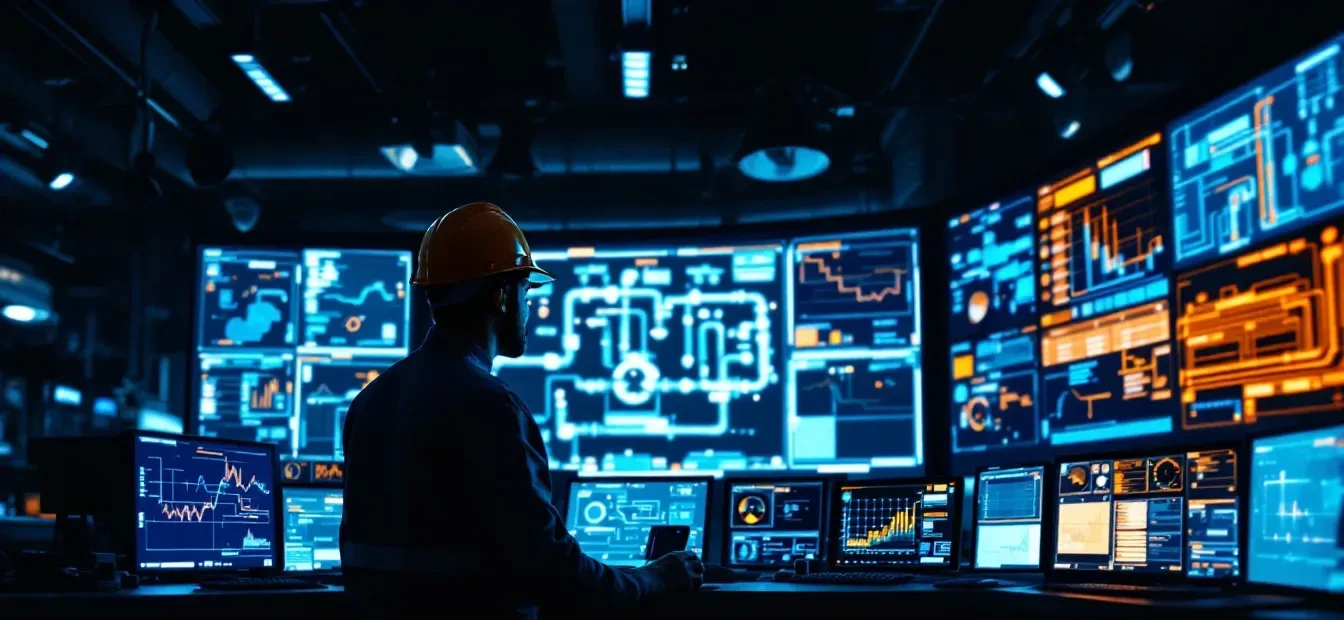
The Industrial Control Systems Cybersecurity Conference celebrates its 25th anniversary October 6–8, 2026, at the W Nashville, gathering the engineers, analysts, and asset owners who keep critical infrastructure running when no one is paying attention.
A Field Forged in Hard Lessons
Twenty-five years ago, ICS security was a niche concern debated by a small community of engineers who already knew each other. Today it sits at the intersection of geopolitics, criminal economics, and physical safety. The journey between those two points was not smooth.
Stuxnet arrived in 2010 and proved that software could destroy centrifuges. That wasn't a thought experiment anymore. Colonial Pipeline followed in May 2021, when a ransomware infection on the IT network prompted operators to shut down 5,500 miles of fuel pipeline as a precaution — not because the OT systems were compromised, but because visibility across the boundary was poor enough that no one could be certain. The U.S. East Coast felt it immediately at the pump. CISA and the FBI attributed the attack to the DarkSide ransomware group, and the incident became the canonical case study for why IT/OT convergence without security controls is a liability, not an efficiency gain.
The Verizon 2024 Data Breach Investigations Report found that system intrusion patterns — the category most relevant to industrial environments — accounted for the largest share of incidents in critical infrastructure sectors. Numbers like that do not appear in a vacuum. They reflect a sustained attacker interest in operational environments that predates any single conference cycle.
The Threat Model Has Fractured
Early ICS security conversations assumed the adversary was a nation-state with surgical intent and years of patience. That model still exists. Volt Typhoon, the Chinese state-sponsored actor CISA warned about in May 2023, pre-positioned itself inside U.S. critical infrastructure networks — not to cause immediate disruption, but to be ready. That is the long-game threat.
But ransomware groups changed the picture. Many of them did not target OT deliberately. They hit corporate networks, encrypted file servers, and operators responded by taking OT systems offline as a precaution. The impact was real regardless of intent. Now a growing subset of ransomware actors is deliberately studying industrial processes. Those are different threat models. Each demands a different defensive posture.
The conference agenda reflects this complexity. Practitioners who cannot patch on a Tuesday because their environment runs continuously — power generation, water treatment, pharmaceutical manufacturing — need strategies that assume some vulnerabilities will never be remediated in a normal window. Risk-based prioritization, network segmentation, and anomaly detection on process data are not optional extras. They are the operational reality.
The AI Question
Artificial intelligence is appearing in OT security conversations in ways that range from genuinely useful to theatrically optimistic. Anomaly detection applied to process telemetry has real merit — industrial systems are highly repetitive, which means deviations from baseline behavior are detectable if you have the right sensor coverage and a model trained on clean data.
Automated CVE prioritization for environments where legacy PLCs will never receive a vendor patch is worth serious examination. Many assets in critical infrastructure run firmware that is end-of-life, unsupported, or simply too embedded in a production process to touch. "Patch everything" is not a policy that applies here. AI-assisted triage that accounts for compensating controls and network exposure could meaningfully help asset owners decide where to focus limited maintenance windows.
The gap between vendor booth claims and deployed reality will, as always, require attendees to ask sharp questions. That skepticism is healthy. It is also one of the things this community does well after 25 years of being oversold solutions.
The Control That Still Fails
For all the progress in OT-specific tooling, one failure mode recurs across incident reports: human error at the IT/OT boundary. Phishing emails reach OT-adjacent staff. Credentials shared between corporate and operational networks allow lateral movement. Remote access solutions provisioned for convenience during COVID-era shutdowns were never hardened or removed. These are not exotic attack paths. They are the same weaknesses that appear in every sector, applied to environments where consequences extend beyond data loss.
MFA adoption in OT environments remains lower than in enterprise IT. The reasons are real — legacy authentication systems, shared operator accounts at HMI terminals, and operational continuity concerns — but they do not make the risk disappear. CISA's cross-sector cybersecurity performance goals, published in 2022 and updated since, identify MFA for remote access as a baseline expectation, not an advanced practice. Many operators have not met it.
This is where security-awareness training intersects directly with the OT world. The engineers and technicians who respond to phishing lures, click on malicious USB drives left in parking lots, or reuse passwords across jump servers and corporate email are not careless people. They are busy people working in environments where security training has historically been an afterthought. Programs that contextualize threats to industrial settings — not generic phishing simulations, but scenarios that reflect the actual work environment — change behavior measurably. Understanding how structured awareness programs align with frameworks like NIST and IEC 62443 matters as much in a control room as in an office tower.
What Defenders Should Take From This Milestone
The 25th anniversary is a useful forcing function. It is an opportunity to ask not just what has improved, but what structural problems the community has learned to tolerate rather than solve.
Segmentation between IT and OT networks is better understood today than it was in 2000. Passive monitoring tools exist that can observe process traffic without risking availability. CISA publishes advisories specifically for ICS vulnerabilities. The ecosystem is more mature. But the attack surface has grown in parallel — cloud-connected SCADA systems, remote monitoring via cellular, and supply chain software that touches OT environments all extend the perimeter in ways that would have been unrecognizable at the conference's founding.
Nashville in October will not resolve these tensions. But it will put the right people in the same room. For a discipline where institutional knowledge lives inside people more than it lives inside documentation, that still matters enormously.
The conference runs October 6–8 at the W Nashville. If industrial cybersecurity is your operational focus, reviewing your team's training baseline before the event is a reasonable use of the weeks between now and then.
How to reduce human-error risk in OT-adjacent environments
- Deploy MFA on all remote access paths to OT networks, including jump servers and vendor VPN accounts, as a non-negotiable baseline.
- Run security-awareness training scenarios that reflect industrial work contexts — phishing lures mimicking vendor maintenance emails, USB drop simulations, and social engineering targeting shift workers.
- Audit shared credentials and service accounts that span IT and OT segments, and enforce least-privilege access before the next maintenance window.
Train2Secure offers awareness training programs mapped to NIST and IEC 62443 controls, so your operators and engineers understand the threats specific to their environment.
Start free — no card requiredSources & further reading
- https://www.cisa.gov/news-events/alerts/2023/05/24/people-republic-china-state-sponsored-cyber-actor-living-off-land
- https://www.cisa.gov/cross-sector-cybersecurity-performance-goals
- https://www.cisa.gov/news-events/cybersecurity-advisories/aa21-131a
- https://www.verizon.com/business/resources/reports/dbir/
Frequently asked questions
When and where is the 2026 ICS Cybersecurity Conference?
The conference runs October 6–8, 2026, at the W Nashville in Nashville, Tennessee. It marks the event's 25th anniversary.
Why is OT security harder than traditional IT security?
Operational technology environments prioritize availability and physical safety above all else. Many systems run 24/7, use legacy hardware with no vendor patch support, and cannot tolerate the downtime that routine IT patching requires. This forces defenders to rely heavily on network segmentation, monitoring, and compensating controls rather than standard patch cycles.
What was the Colonial Pipeline attack and why does it still matter?
In May 2021, DarkSide ransomware infected Colonial Pipeline's IT network. Operators shut down pipeline operations as a precaution because visibility across the IT/OT boundary was insufficient to confirm OT systems were clean. The incident demonstrated that an IT compromise can cause physical infrastructure disruption even without direct OT intrusion.
What security controls matter most for ICS and OT environments?
CISA's cross-sector cybersecurity performance goals highlight MFA for remote access, network segmentation between IT and OT, asset inventory, and incident response planning as baseline priorities. Security awareness training tailored to operational environments also reduces the human-error risks that frequently enable initial access.